
Introduction
Technology is now a big part of daily life. We use phones, computers, smart TVs, and the internet for work, learning, shopping, and entertainment. However, when something goes wrong, it can feel frustrating and confusing. Many people think tech issues are too complex to solve without professional help. The truth is, most common problems have simple solutions.
Learning how to fix tech problems can save time, money, and stress. You do not need to be an expert or have deep technical knowledge. With the right approach, basic understanding, and a calm mindset, you can solve many issues on your own. From slow devices to internet errors and software crashes, simple steps often work better than you expect.
This guide is written in simple English for beginners and intermediate users. It focuses on practical actions you can take right away. You will learn what tech problems are, why it is important to solve them, and how to fix them step by step. The article also explains benefits, risks, common mistakes, and expert tips.
By the end, you will feel more confident handling everyday issues. Instead of panicking or waiting for help, you will know how to fix tech problems in a smart and safe way. This skill is useful at home, at work, and even for helping others.
What Is How to Fix Tech Problems?
How to fix tech problems means finding and solving issues related to digital devices, software, or networks. These problems can happen on computers, smartphones, tablets, printers, or internet connections. Some issues are small, while others may seem serious at first.
Tech problems usually fall into a few main categories. Hardware problems involve physical parts like screens, keyboards, or cables. Software problems include app crashes, system errors, or updates failing. Network problems relate to Wi-Fi, mobile data, or online services.
Fixing tech problems does not always mean repairing or replacing parts. In many cases, it means adjusting settings, restarting devices, or updating software. Understanding the problem clearly is the first step. Once you know what is wrong, finding a solution becomes much easier.
Why Is How to Fix Tech Problems Important?
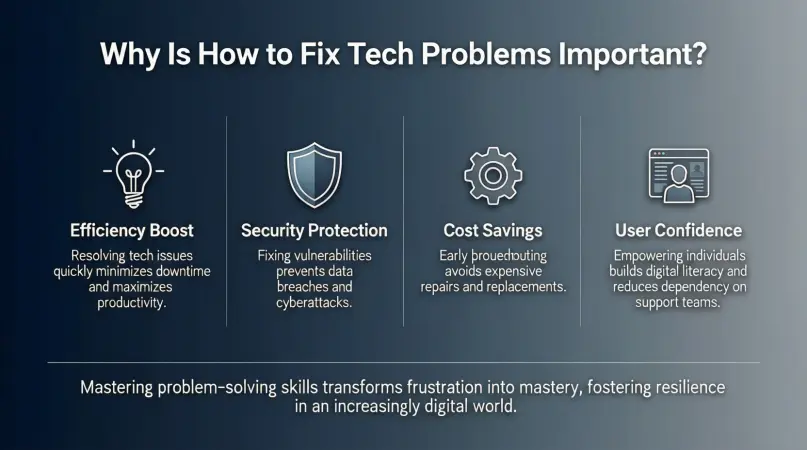
Knowing how to fix tech problems is important in today’s digital world. Almost every job and daily task depends on technology in some way. When something stops working, productivity and comfort are affected.
First, it saves money. Simple fixes can prevent unnecessary repair costs or service fees. Second, it saves time. You do not have to wait for someone else to help you. Third, it reduces stress. Understanding what to do keeps you calm during issues.
Also, learning how to fix tech problems improves digital confidence. You stop fearing errors and start seeing them as normal challenges. Over time, you become faster and smarter at handling problems. This skill is valuable for personal growth and professional success.
Detailed Step-by-Step Guide
Step 1: Identify the Problem Clearly
The first step in how to fix tech problems is understanding what is wrong. Do not guess. Observe carefully.
Ask yourself:
- What exactly is not working?
- When did the problem start?
- Did anything change before the issue appeared?
Clear identification saves time and avoids wrong solutions.
Step 2: Restart the Device
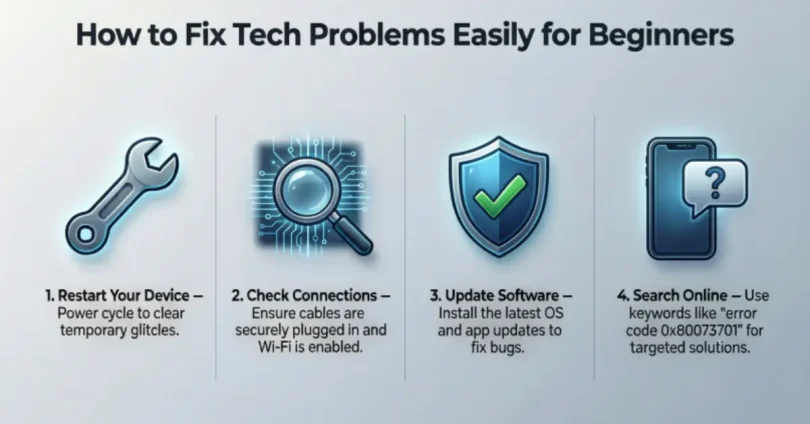
Restarting is one of the simplest and most effective steps. It clears temporary files and refreshes the system.
- Restart phones and computers
- Turn routers off and on
- Close and reopen applications
Many problems disappear after a restart.
Step 3: Check Power and Connections
Loose cables and low battery cause many issues. Make sure everything is properly connected.
- Check power cables
- Ensure chargers work
- Verify internet cables and Wi-Fi signals
This step is basic but often overlooked.
Step 4: Update Software and Systems
Outdated software can cause errors and crashes. Updates fix bugs and improve performance.
- Update operating systems
- Update apps and drivers
- Restart after updates
Regular updates reduce future problems.
Step 5: Check Settings and Permissions
Sometimes settings are changed by mistake. Review them carefully.
- Check internet settings
- Review app permissions
- Restore default settings if needed
Incorrect settings often create hidden problems.
Step 6: Scan for Malware or Viruses
Malware slows devices and causes strange behavior.
- Use built-in security tools
- Run a full scan
- Remove detected threats
Keeping devices clean improves performance.
Step 7: Search Error Messages Carefully
Error messages provide clues. Read them slowly.
- Note error codes
- Check recent changes
- Use built-in help options
Understanding messages helps find correct solutions.
Step 8: Use Built-in Troubleshooters
Many systems include troubleshooting tools.
- Network troubleshooters
- System repair options
- App diagnostics
These tools automate simple fixes.
Step 9: Test One Change at a Time
Avoid making many changes at once. Test each fix.
- Apply one solution
- Check results
- Move to next step if needed
This approach prevents confusion.
Step 10: Reset or Reinstall if Necessary
If nothing works, reset or reinstall as a last option.
- Backup important data
- Reset settings
- Reinstall software
This often solves stubborn issues.
Benefits of How to Fix Tech Problems
- Saves money on repairs and services
- Reduces stress and frustration
- Improves confidence with technology
- Saves time and increases productivity
- Helps others with similar problems
- Builds useful digital skills
Disadvantages / Risks
- Risk of data loss if done incorrectly
- Temporary solutions may hide deeper issues
- Overconfidence can cause mistakes
- Some problems need professional help
- Incorrect fixes can worsen issues
Common Mistakes to Avoid
Many people make simple mistakes when learning how to fix tech problems. Avoid rushing. Always understand the issue before acting. Do not skip basic steps like restarting or checking connections. Another mistake is ignoring updates, which often fix known issues.
Avoid changing many settings at once. This makes it hard to know what worked or failed. Also, do not ignore warnings or error messages. They are there to help you. Finally, avoid unsafe downloads or unknown tools, as they can create new problems.
FAQs
1. Can beginners really learn how to fix tech problems?
Yes, beginners can learn easily. Most common problems have simple solutions. With patience and practice, anyone can improve.
2. What is the first thing to do when a device stops working?
Restart the device. It solves many issues quickly and safely.
3. Is it safe to fix tech problems without expert help?
For basic problems, yes. Follow simple steps and avoid risky changes. For serious issues, seek help.
4. How often should software be updated?
Check for updates regularly. Monthly updates are a good habit for most devices.
5. What should I do if I cannot fix the problem?
Stop and seek professional help. Forcing fixes can cause damage.
6. Can fixing tech problems improve job skills?
Yes, digital problem-solving skills are valuable in many careers and daily tasks.
Expert Tips & Bonus Points
Stay calm when problems appear. Stress makes mistakes more likely. Keep devices clean and updated to prevent issues. Always back up important data. Learn from past problems and note what worked. Over time, how to fix tech problems becomes easier and faster.
Conclusion
Technology problems are a normal part of modern life. Instead of fearing them, learning how to fix tech problems gives you control and confidence. This guide showed that most issues are not as difficult as they seem. With simple steps like restarting, updating, checking settings, and using built-in tools, many problems can be solved quickly.
Understanding the basics saves time and money. It also reduces stress and helps you stay productive. While not every issue can be fixed alone, knowing when and how to try makes a big difference. Over time, you will recognize patterns and solutions faster.
The key is patience and practice. Start with small fixes and build your skills step by step. Avoid common mistakes, stay safe, and keep learning. When you understand how to fix tech problems, technology becomes a helpful tool instead of a source of frustration. This knowledge empowers you in both personal and professional life, making everyday technology easier to manage.