
Introduction
In today’s digital world, computers and smartphones are part of our everyday life. From work tasks to personal communication, software plays a key role in how smoothly our day goes. Choosing the best software for daily use can save time, reduce stress, and improve productivity. However, with thousands of options available, beginners and even intermediate users often feel confused about what to install and what to avoid.
The best software for daily use is not about complex tools or expensive programs. Instead, it focuses on simple, reliable, and useful applications that help you complete common tasks. These tasks may include writing documents, browsing the internet, managing files, protecting your device, or communicating with others. When the right tools are installed, daily work becomes faster and more enjoyable.
Another important point is ease of use. Daily software should be easy to learn, even for people with basic computer skills. It should work smoothly on average devices without slowing them down. Most users want tools that do their job quietly in the background while offering helpful features when needed.
This guide is written in simple English for beginners and intermediate readers. It explains what daily use software is, why it matters, and how to choose the right tools. You will also learn about benefits, risks, common mistakes, and expert tips. By the end, you will clearly understand how the best software for daily use can improve your digital routine.
What Is Best Software for Daily Use?
The best software for daily use refers to computer or mobile programs that people use regularly for common tasks. These tasks are part of everyday digital life, both at home and at work. This software is designed to be practical, user friendly, and efficient.
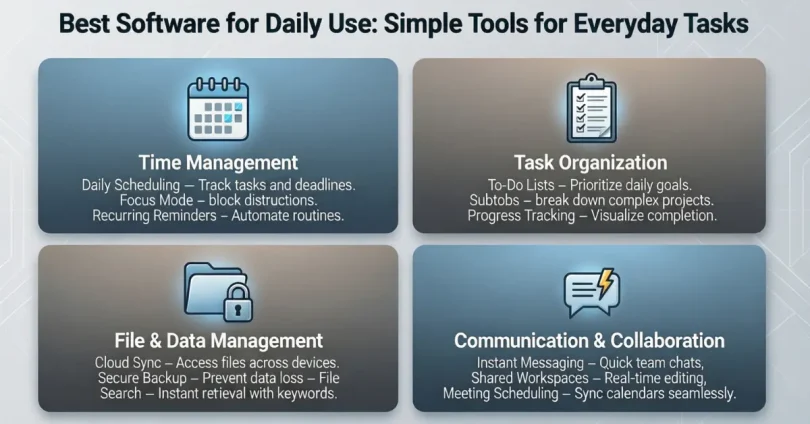
Daily use software usually includes tools for writing, browsing, communication, security, and file management. For example, a text editor helps you write documents, while a web browser allows you to search information online. These tools may not seem special, but they are essential for daily activities.
Unlike professional or specialized software, daily use tools do not require advanced technical knowledge. They focus on simplicity and stability. A good daily use application should work smoothly without frequent errors or crashes. It should also receive regular updates for better performance and security.
Another key feature is compatibility. The best software for daily use works well on different devices and operating systems. This makes it easier for users to switch devices or share files with others. In simple words, daily use software is the digital backbone of your everyday tasks.
Why Is Best Software for Daily Use Important?
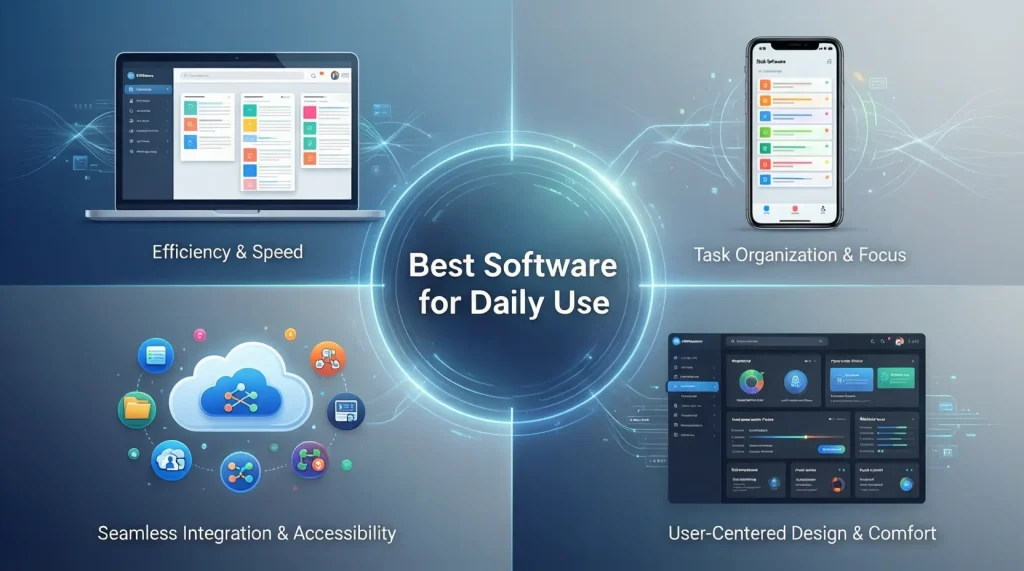
Using the right software every day has a strong impact on productivity and comfort. When tools are reliable, tasks take less time and effort. This helps users focus on their actual work instead of fixing software problems.
The best software for daily use also improves digital safety. Many daily tools include built in security features that protect your data. For example, secure browsers and antivirus programs reduce the risk of malware and data theft.
Another reason daily software is important is consistency. When you use the same trusted tools regularly, you develop better habits. You know where features are located and how to complete tasks quickly. This saves mental energy and reduces frustration.
Cost is also a factor. Many daily use tools are free or affordable, which makes them accessible to everyone. You do not need expensive programs to manage emails, documents, or files. Choosing the right daily software helps you get the best value without wasting money.
Detailed Step-by-Step Guide
Step 1: Identify Your Daily Needs
The first step is understanding what you do on your device every day. Make a simple list of tasks you perform regularly.
Common daily tasks include:
- Writing documents or notes
- Browsing the internet
- Sending emails or messages
- Managing files and folders
- Protecting your device
When you know your needs, choosing the best software for daily use becomes easier.
Step 2: Focus on Ease of Use
Always choose software that is easy to understand. A clean interface and clear menus are important, especially for beginners. If a tool feels confusing during the first use, it may not be suitable for daily work.
Good daily software offers helpful tips, simple settings, and clear instructions. This reduces the learning curve and saves time.
Step 3: Check System Compatibility
Before installing any software, check if it works well with your device. Some programs need more memory or processing power. Daily use tools should run smoothly on standard systems.
Compatibility with different file formats is also important. This ensures you can open, edit, and share files without problems.
Step 4: Look for Security and Updates
Security should never be ignored. The best software for daily use receives regular updates. These updates fix bugs and protect against new threats.
Always choose software from trusted sources. Avoid unknown programs that may contain hidden risks.
Step 5: Test and Adjust
After installing software, use it for a few days. Check if it meets your expectations. If it slows your system or feels uncomfortable, consider alternatives.
Daily use software should fit naturally into your routine without causing stress.
Benefits of Best Software for Daily Use
- Improves productivity by saving time on routine tasks
- Makes daily work easier and more organized
- Reduces system errors and technical issues
- Enhances digital security and data protection
- Supports better learning and skill development
- Works smoothly on most devices
- Helps maintain a consistent workflow
Disadvantages / Risks
- Too many tools can slow down your device
- Poor quality software may cause crashes
- Outdated programs increase security risks
- Complex tools can confuse beginners
- Some free tools may include unwanted features
Common Mistakes to Avoid
One common mistake is installing too many applications at once. This often leads to clutter and confusion. Daily use software should be limited to tools you actually need.
Another mistake is ignoring updates. Skipping updates may seem harmless, but it can expose your system to security threats. Regular updates are essential for safe usage.
Many users also choose software based only on popularity. A popular tool may not always suit your needs. Focus on usefulness rather than trends.
FAQs
What is meant by best software for daily use?
It means software designed for everyday tasks like writing, browsing, communication, and security. These tools focus on simplicity and reliability.
Is daily use software suitable for beginners?
Yes, most daily use tools are created with beginners in mind. They have simple interfaces and easy learning curves.
Do I need paid software for daily tasks?
In most cases, no. Many free tools are powerful enough for daily needs. Paid options may offer extra features but are not always necessary.
How often should daily software be updated?
Updates should be installed whenever available. Regular updates improve performance and security.
Can daily software slow down my device?
Good daily software should not slow down your system. Problems usually occur when too many or poorly optimized tools are installed.
How do I know if software is safe?
Choose software from trusted developers and official platforms. Check user reviews and update history before installing.
Expert Tips & Bonus Points
Always keep your system clean by removing unused applications. This improves performance and reduces risks. Use built in tools to manage startup programs so your device boots faster.
Create a simple routine for updates and backups. This protects your data and keeps software running smoothly. Learn basic shortcuts and features of your daily tools to save time.
The best software for daily use is not about having many tools, but about having the right ones. Choose wisely and review your setup every few months.
Conclusion
Choosing the best software for daily use is an important step toward a smoother digital life. The right tools help you work faster, stay organized, and protect your device. For beginners, simple and user friendly software builds confidence. For intermediate users, reliable daily tools improve efficiency and consistency.
Daily use software does not need to be complex or expensive. It should quietly support your routine without creating extra work. By understanding your needs, checking compatibility, and focusing on security, you can build a strong and practical software setup.