
Introduction
Free software tools have changed the way people work, learn, and create in the digital world. Today, you do not need to spend a lot of money to write documents, edit images, manage projects, or protect your computer. With the right free software tools, anyone can perform professional tasks using only a computer and an internet connection. This is great news for beginners, students, freelancers, and even small businesses.
In simple words, free software tools help you save money while still getting useful features. Many of these tools are created by skilled developers and supported by large communities. Because of this, they are often updated, secure, and easy to improve. Some free software tools are so powerful that they can easily replace paid programs for everyday tasks.
Another reason free software tools are becoming popular is accessibility. You can download them easily, install them quickly, and start using them without complex setup. Many tools also work on different operating systems, which makes them flexible for many users.
In this guide, you will learn what free software tools are, why they are important, and how to use them step by step. You will also discover their benefits, risks, common mistakes, and expert tips. By the end, you will clearly understand how free software tools can improve your daily digital work without costing anything.
What is Free Software Tools?
Free software tools are programs or applications that users can download and use without paying money. These tools are designed to help people complete tasks such as writing, designing, coding, managing files, or securing systems.
The word “free” does not always mean low quality. In many cases, free software tools are developed by experienced programmers who want to share their work with others. Some tools are fully free, while others offer basic features at no cost and advanced options later.
Free software tools can be open-source or freeware. Open-source tools allow users to view and modify the code, while freeware tools are free to use but do not share the code. Both types are useful for different needs.
Why is Free Software Tools Important?
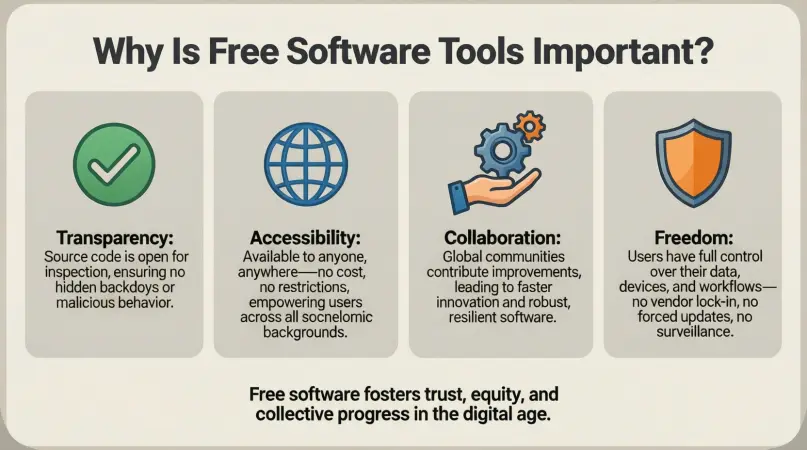
Free software tools are important because they remove financial barriers. Not everyone can afford expensive software licenses, especially beginners and small teams.
They also encourage learning and experimentation. When tools are free, users feel more comfortable trying new things without fear of losing money.
Another important reason is flexibility. Many free software tools work across different devices and systems. This makes collaboration easier and smoother.
Detailed Step-by-Step Guide
Step 1: Identify Your Needs
Before choosing free software tools, clearly define what you want to do. Are you writing content, editing images, or managing tasks?
Make a simple list of your goals. This helps you avoid downloading unnecessary tools.
Step 2: Search Trusted Sources
Look for tools on official websites or well-known software platforms. This reduces the risk of malware.
Always read descriptions carefully to ensure the tool matches your needs.
Step 3: Check System Requirements
Some free software tools require specific operating systems or hardware.
Make sure your device supports the tool to avoid performance issues.
Step 4: Download and Install Safely
Download the software from the official page only.
During installation, avoid extra offers or add-ons by reading each step carefully.
Step 5: Learn the Basics
Most free software tools offer tutorials or guides.
Spend some time learning the interface and basic features before using advanced options.
Step 6: Customize Settings
Adjust settings to fit your workflow.
Customization helps you work faster and more comfortably.
Step 7: Update Regularly
Keep your free software tools updated.
Updates improve security and add new features.
Benefits of Free Software Tools
- No cost for basic use
- Easy access for beginners
- Large user communities for support
- Regular updates and improvements
- Flexible use across devices
- Encourages skill development
- Reduces dependency on expensive software
Disadvantages / Risks
- Limited advanced features
- Less professional support
- Possible compatibility issues
- Learning curve for some tools
- Risk of fake download sources
Common Mistakes to Avoid
One common mistake is downloading free software tools from unknown websites. This can expose your system to security risks.
Another mistake is installing too many tools at once. This can slow down your computer and cause confusion.
Ignoring updates is also a problem. Outdated tools may have bugs or security weaknesses.
Finally, many users skip tutorials. This leads to poor use of features and wasted potential.
FAQs
What are free software tools used for?
Free software tools are used for writing, designing, coding, editing, organizing, and many other tasks without paying money.
Are free software tools safe to use?
Yes, if downloaded from trusted sources. Always avoid unofficial websites.
Can free software tools replace paid software?
In many cases, yes. For basic and intermediate tasks, free tools are often enough.
Do free software tools work offline?
Some tools work offline, while others need an internet connection. It depends on the software.
Are free software tools good for beginners?
Yes, they are perfect for beginners because they reduce cost and encourage learning.
How often should I update free software tools?
You should update them whenever a new version is available to stay secure and efficient.
Expert Tips & Bonus Points
Always test a tool before fully relying on it.
Join online communities related to your tools for tips and help.
Backup your data regularly, especially when using new software.
Try different tools to find what fits your workflow best.
Conclusion
Free software tools offer a powerful and affordable way to handle digital tasks in today’s world. They allow beginners and intermediate users to explore technology without financial pressure. By using free software tools, you can write documents, design graphics, manage projects, and protect your system with ease.
The key to success is choosing the right tools and learning how to use them properly. When selected carefully, free software tools can match the performance of paid options for many tasks. They also help users build skills and confidence over time.