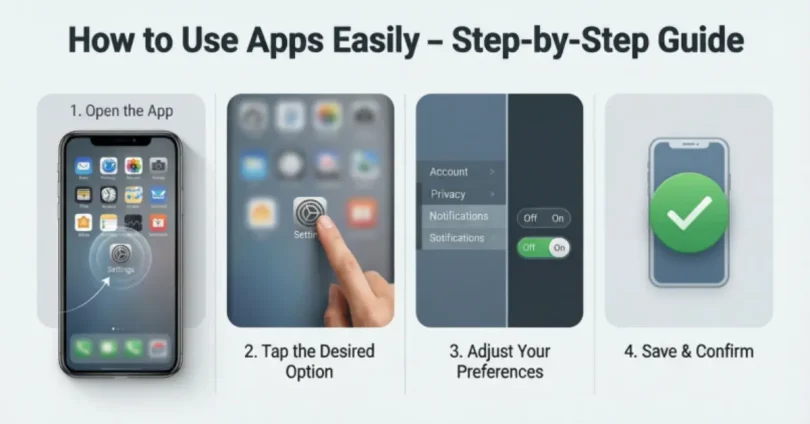

Introduction
In today’s digital world, apps have become essential tools for everyday life. From communication and entertainment to productivity and learning, there’s an app for almost everything. However, many people struggle with using apps effectively, especially beginners who are not very tech-savvy. This can make using a smartphone or tablet feel overwhelming, leading to frustration and wasted time.
The good news is that learning how to use apps easily doesn’t have to be complicated. With the right guidance, anyone can navigate apps confidently, understand their features, and make the most out of them. Whether you want to chat with friends, manage your tasks, or explore new tools, mastering apps can improve your daily life significantly.
This guide will walk you through everything you need to know about using apps easily. From understanding what apps are to detailed step-by-step instructions, benefits, common mistakes, and expert tips, this article covers all the essentials in simple, easy-to-follow language. By the end of this guide, you will feel confident in handling apps and using them efficiently, even if you are a beginner.
The key to success is practice and patience. Apps are designed to make life easier, and once you know how to use them properly, they can save time, enhance productivity, and provide entertainment. So, let’s dive into this complete guide on how to use apps easily and start enjoying technology without stress.
What is [How to Use Apps Easily]?
When we talk about learning how to use apps easily, it refers to understanding how mobile and desktop applications function, and being able to operate them without confusion. Apps are software programs designed to perform specific tasks. Examples include messaging apps like WhatsApp, social media apps like Instagram, productivity apps like Microsoft To Do, and learning apps like Duolingo.
Understanding apps involves:
- Installing apps correctly from app stores
- Navigating the interface smoothly
- Using basic and advanced features
- Managing settings and preferences
- Keeping apps updated for security and performance
Learning how to use apps easily means you can open an app, find the features you need, complete your tasks efficiently, and troubleshoot minor issues without help. For beginners, this skill is crucial because apps are everywhere, and knowing how to use them can significantly enhance both personal and professional life.
Why is [How to Use Apps Easily] Important?
![why is [how to use apps easily] important](https://maztertech.com/wp-content/uploads/2026/01/why-is-how-to-use-apps-easily-important.webp)
Learning how to use apps easily has several important benefits:
- Saves Time: Proper knowledge helps you complete tasks faster.
- Increases Productivity: You can manage work, reminders, and schedules efficiently.
- Enhances Communication: Using messaging and social media apps effectively keeps you connected.
- Boosts Learning: Educational apps become more accessible and useful.
- Reduces Frustration: Knowing how apps work prevents confusion and stress.
- Improves Safety: Understanding permissions and updates keeps your data secure.
For anyone, whether a student, professional, or retiree, mastering apps can simplify life. Without this skill, even simple activities like sending a message or paying bills online can become challenging. That’s why this guide is focused on helping beginners and intermediate users get comfortable with apps quickly.
Detailed Step-by-Step Guide
Here’s a complete, practical guide on how to use apps easily. Follow these steps to navigate apps like a pro.
Step 1: Choosing the Right App
Not all apps are created equal. To use apps effectively, start by selecting the right one:
- Check Reviews: Look for apps with high ratings and positive feedback.
- Verify Compatibility: Make sure the app works on your device (iOS, Android, Windows).
- Consider Purpose: Decide what problem you want the app to solve.
Example: If you want to manage tasks, apps like Todoist or Microsoft To Do are suitable choices.
Step 2: Installing Apps Correctly
Installing an app is simple but crucial. Follow these steps:
- Open your device’s app store (Google Play Store or Apple App Store).
- Search for the app by name.
- Tap Install or Get.
- Wait for the download and installation to complete.
Tips:
- Use Wi-Fi to avoid using mobile data.
- Ensure enough storage is available.
- Read app permissions before accepting.
Step 3: Creating an Account or Logging In
Many apps require registration:
- Sign Up: Provide email, phone number, or social media login.
- Verify Account: Enter a code sent via email or SMS.
- Log In: Use credentials to access the app anytime.
Example: WhatsApp requires your phone number for verification to start using it.
Step 4: Navigating the App Interface
Learning the interface is key to using apps easily:
- Menus: Explore the main menu to find all features.
- Buttons & Icons: Tap icons to perform actions like send, save, or delete.
- Settings: Adjust preferences for notifications, privacy, and themes.
Tip: Spend a few minutes exploring the app before starting actual tasks. Familiarity saves time later.
Step 5: Using Core Features
Every app has key features. Focus on mastering them first:
- Messaging apps: sending messages, media files, voice notes.
- Productivity apps: creating tasks, setting reminders, syncing calendars.
- Social media apps: posting updates, liking content, following accounts.
- Learning apps: starting lessons, tracking progress, completing exercises.
Example: In Zoom, core features include joining meetings, muting/unmuting, and screen sharing.
Step 6: Managing Updates
App updates improve functionality and security:
- Always update apps from official stores.
- Enable automatic updates for convenience.
- Read update notes to know what has changed.
Tip: Ignoring updates may cause apps to crash or expose your device to security risks.
Step 7: Customizing App Settings
Personalizing apps enhances your experience:
- Change themes or appearance.
- Enable or disable notifications.
- Adjust privacy and security settings.
Example: You can mute group notifications on messaging apps to avoid distractions.
Step 8: Troubleshooting Common Problems
Even experienced users face app issues. Common solutions include:
- Restarting the app or device.
- Clearing cache or app data.
- Reinstalling the app.
- Checking internet connection.
Tip: Most issues are minor and fixable without professional help.
Benefits of [How to Use Apps Easily]
Learning how to use apps easily offers many advantages:
- Saves time in daily tasks
- Reduces stress and frustration
- Increases efficiency and productivity
- Improves digital literacy
- Enhances communication with friends and colleagues
- Provides entertainment and educational value
- Strengthens online security awareness
Example: Efficiently using finance apps can help you track expenses and manage budgets without manual calculations.
Disadvantages / Risks
While apps are helpful, there are some risks:
- Overdependence: Relying too much on apps can reduce critical thinking.
- Data Privacy Issues: Apps may access personal information.
- Distraction: Social media or game apps can waste time.
- Security Threats: Malware-infected apps can harm your device.
- Cost: Some apps require paid subscriptions.
Being aware of these risks helps you make informed decisions and use apps safely.
Common Mistakes to Avoid
Many beginners make errors when using apps:
- Ignoring Updates: Leads to bugs and security issues.
- Using Weak Passwords: Increases risk of account hacking.
- Not Exploring Features: Limits app potential.
- Downloading from Unofficial Sources: Can infect your device.
- Overloading Device with Apps: Slows performance and storage.
- Ignoring Privacy Settings: Exposes personal data to apps.
Avoiding these mistakes ensures a smoother, safer app experience.
FAQs
1. Can I use apps without internet?
Some apps work offline, like note-taking, calculators, and certain games. However, messaging, social media, and streaming apps require an internet connection.
2. How do I find the best apps for my needs?
Check app stores, read reviews, and consider recommendations from friends or tech websites. Focus on purpose, features, and reliability.
3. Are paid apps better than free apps?
Not always. Paid apps usually offer advanced features, but many free apps are highly effective. Choose based on your requirements.
4. How do I keep my apps secure?
Update apps regularly, enable two-factor authentication, avoid unknown downloads, and review app permissions carefully.
5. What if an app keeps crashing?
Restart the app or device, clear cache, reinstall the app, or contact support. Ensure your device meets app requirements.
6. Can apps slow down my phone?
Yes. Apps consume memory and storage, especially heavy games and social media apps. Regularly uninstall unused apps and manage storage.
7. How can I learn advanced app features?
Explore tutorials, help sections within the app, or online guides. Experimenting with features also improves familiarity.
8. Is it safe to log in using social media accounts?
Generally yes, if the app is reputable. Ensure it doesn’t request unnecessary permissions, and use strong passwords for linked accounts.
Expert Tips & Bonus Points
- Use Widgets: Some apps offer widgets for quick access to features.
- Organize Apps: Group similar apps into folders for easy navigation.
- Shortcuts: Learn keyboard or gesture shortcuts to save time.
- Notifications Management: Only enable essential notifications to reduce distractions.
- Backup Data: Regularly back up app data to avoid losing important information.
- Experiment Gradually: Start with basic functions before exploring advanced features.
- Stay Updated: Follow app blogs or social media accounts for tips and updates.
Bonus Tip: Consider creating a “learning routine” for new apps. Spend 10–15 minutes exploring new apps each day to improve your proficiency gradually.
Conclusion
Mastering how to use apps easily is an essential skill in today’s technology-driven world. With the right approach, even beginners can navigate apps confidently, use features efficiently, and benefit from the convenience they offer. By following the steps in this guide, you can choose the right apps, install them correctly, explore their features, customize settings, and troubleshoot common issues.
The advantages of knowing how to use apps easily go beyond convenience—they save time, enhance productivity, improve communication, and strengthen digital literacy. While there are risks such as data privacy and overdependence, these can be managed with careful practices and smart usage. Remember to avoid common mistakes, keep apps updated, and explore features gradually.