
Introduction
Smartphones have become an important part of our daily lives. From morning alarms to late-night entertainment, most people rely on their phones for many tasks. Android users, in particular, have access to millions of apps that can help with work, study, communication, and personal life. However, not every app is worth installing. Many apps look attractive but offer little real value. That is why choosing useful Android apps is so important today.
Useful Android apps are designed to solve real problems and make everyday tasks easier. They help you save time, stay organized, learn new skills, and enjoy your phone without stress. Whether you are a beginner who just bought an Android phone or an intermediate user looking to improve productivity, the right apps can completely change your experience.
In this guide, you will learn what useful Android apps are, why they matter, and how to choose them wisely. We will also explore step-by-step methods to find, install, and manage apps safely. You will discover benefits, risks, common mistakes, and expert tips that many users overlook. This article is written in simple English, using short paragraphs and clear examples, so anyone can understand it easily.
What is Useful Android Apps?
Useful Android apps are applications that provide practical value and improve how you use your smartphone. These apps are not just for fun or decoration. Instead, they help you complete tasks faster, stay informed, and manage your daily routine more efficiently.
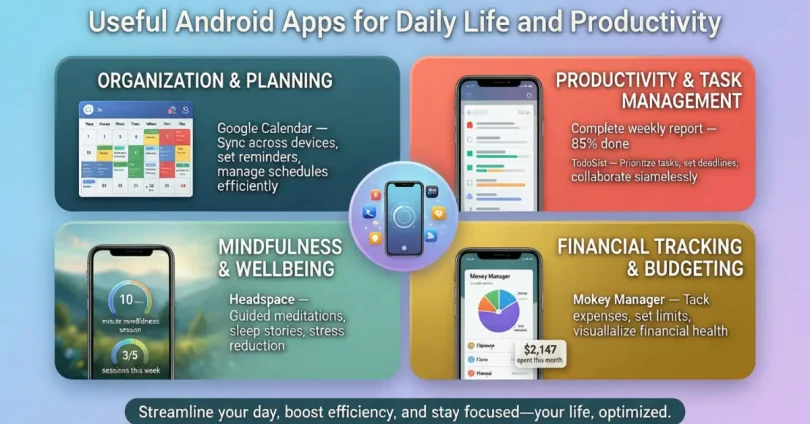
For example, a note-taking app helps you remember ideas, while a calendar app keeps track of important dates. A file manager organizes your documents, and a fitness app helps you stay active. All these are considered useful Android apps because they serve a clear purpose.
A useful app usually has a simple design, clear features, and reliable performance. It does not confuse users with unnecessary options. Most importantly, it solves a real problem or meets a real need. Beginners often prefer apps that are easy to use, while intermediate users may look for advanced features.
Why is Useful Android Apps Important?
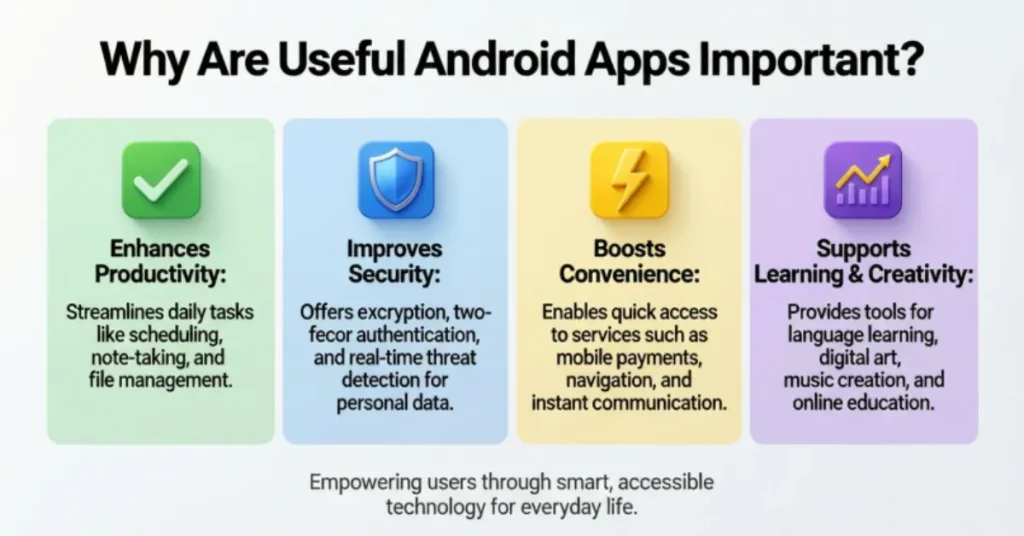
Useful Android apps play an important role in modern digital life. Smartphones are powerful tools, but without the right apps, much of that power is wasted. Installing the right apps helps you get the most out of your device.
First, useful apps improve productivity. They help you manage tasks, set reminders, and organize work efficiently. This is especially helpful for students, freelancers, and office workers.
Second, they help with learning and self-improvement. Educational apps allow users to learn languages, improve skills, and access knowledge anytime.
Third, useful Android apps help save time. Instead of doing tasks manually, apps automate processes like bill payments, navigation, and communication.
Detailed Step-by-Step Guide
Step 1: Understand Your Needs
Before installing any app, think about what you actually need. Ask yourself simple questions.
Do you need help with work tasks?
Are you looking for study support?
Do you want better health tracking?
Knowing your needs helps you avoid installing unnecessary apps.
Step 2: Search Smartly on Play Store
Use clear keywords when searching. Instead of searching “apps,” search for specific needs like “note app” or “budget tracker.” This helps you find useful Android apps faster.
Read the app description carefully. A good description explains features clearly and honestly.
Step 3: Check Ratings and Reviews
Ratings and reviews show real user experiences. Apps with high ratings and positive reviews are usually more reliable.
Read both positive and negative reviews. This gives you a balanced idea of what to expect.
Step 4: Check App Permissions
Always review app permissions before installing. Useful Android apps only ask for permissions they truly need.
For example, a calculator app should not ask for camera access. If it does, be cautious.
Step 5: Install and Test Slowly
Install one app at a time. Use it for a few days before installing another one. This helps you understand if the app is truly useful.
If an app feels confusing or unnecessary, uninstall it.
Step 6: Organize Your Apps
Group apps into folders like work, study, tools, and entertainment. This makes your phone cleaner and easier to use.
Organized phones help users stay focused and productive.
Step 7: Update Apps Regularly
Updates fix bugs and improve performance. Always keep your useful Android apps updated for better security and features.
Step 8: Review Apps Monthly
Once a month, review installed apps. Remove apps you no longer use. This frees storage and improves performance.
Benefits of Useful Android Apps
- Help save time in daily tasks
- Improve productivity and focus
- Make learning easier and accessible
- Help manage personal and professional life
- Reduce stress through better organization
- Improve phone performance by reducing clutter
- Offer convenience and flexibility
- Support healthy habits and routines
Disadvantages / Risks
- Some apps may collect unnecessary data
- Poorly designed apps can slow down phones
- Too many apps cause distraction
- Free apps may contain ads
- Fake apps can harm security
- Battery drain from background activity
Understanding these risks helps users make smarter choices.
Common Mistakes to Avoid
Many users make simple mistakes when installing apps. Avoiding these can improve your experience.
One common mistake is installing too many apps at once. This causes confusion and clutter.
Another mistake is ignoring permissions. Always check what access an app is requesting.
Some users trust apps with low ratings. This often leads to disappointment or security issues.
Not updating apps is also a mistake. Old versions may have bugs or security risks.
Finally, many people forget to uninstall unused apps. These apps waste storage and slow down performance.
FAQs
What are the most useful Android apps for beginners?
Beginners should start with basic apps like a file manager, note-taking app, calendar, and calculator. These apps help with daily tasks and are easy to use.
How many useful Android apps should I install?
There is no fixed number. Install only apps you actually use. Quality matters more than quantity for better performance.
Are free apps safe to use?
Many free apps are safe, but always check ratings, reviews, and permissions. Avoid apps that ask for unnecessary access.
Can useful Android apps improve battery life?
Yes, some apps help manage battery usage. However, poorly designed apps can drain battery, so choose wisely.
How often should I clean my apps?
Review your apps once a month. Remove apps you no longer use to keep your phone fast and organized.
Do useful Android apps need internet access?
Some apps work offline, while others need internet. Always check app details to understand how they function.
Expert Tips & Bonus Points
Choose apps with simple design and clear features. Complex apps often confuse users.
Avoid installing apps from unknown sources. Stick to trusted app stores for safety.
Use lightweight apps if your phone has limited storage or RAM.
Turn off notifications for non-essential apps. This helps improve focus and reduces distraction.
Backup important app data regularly to avoid data loss.
Read update notes to understand new features and changes.
Expert users often prefer fewer but powerful useful Android apps instead of many average ones.
Conclusion
Android smartphones offer endless possibilities, but the true value lies in choosing the right apps. Useful Android apps help transform a simple phone into a powerful tool for productivity, learning, and daily management. Instead of filling your device with unnecessary apps, focusing on practical and reliable ones makes a big difference.
Throughout this guide, we explored what makes an app useful, why it matters, and how to select apps step by step. We also discussed benefits, risks, common mistakes, and expert advice to help you make smarter decisions. These insights are especially helpful for beginners and intermediate users who want better control over their digital life.
Remember, the goal is not to install more apps, but to install better ones. Take time to understand your needs, read reviews, and test apps carefully. Regular app cleanup and updates also play an important role in maintaining performance.